Involvement of the LcARF17- and LcRAP2–4-LcLOX7 regulatory modules in the biosynthesis of fresh aroma in litchi aril
Link to paper: https://doi.org/10.1093/hr/uhag010
Published: 09 January 2026, Horticulture Research
Summary
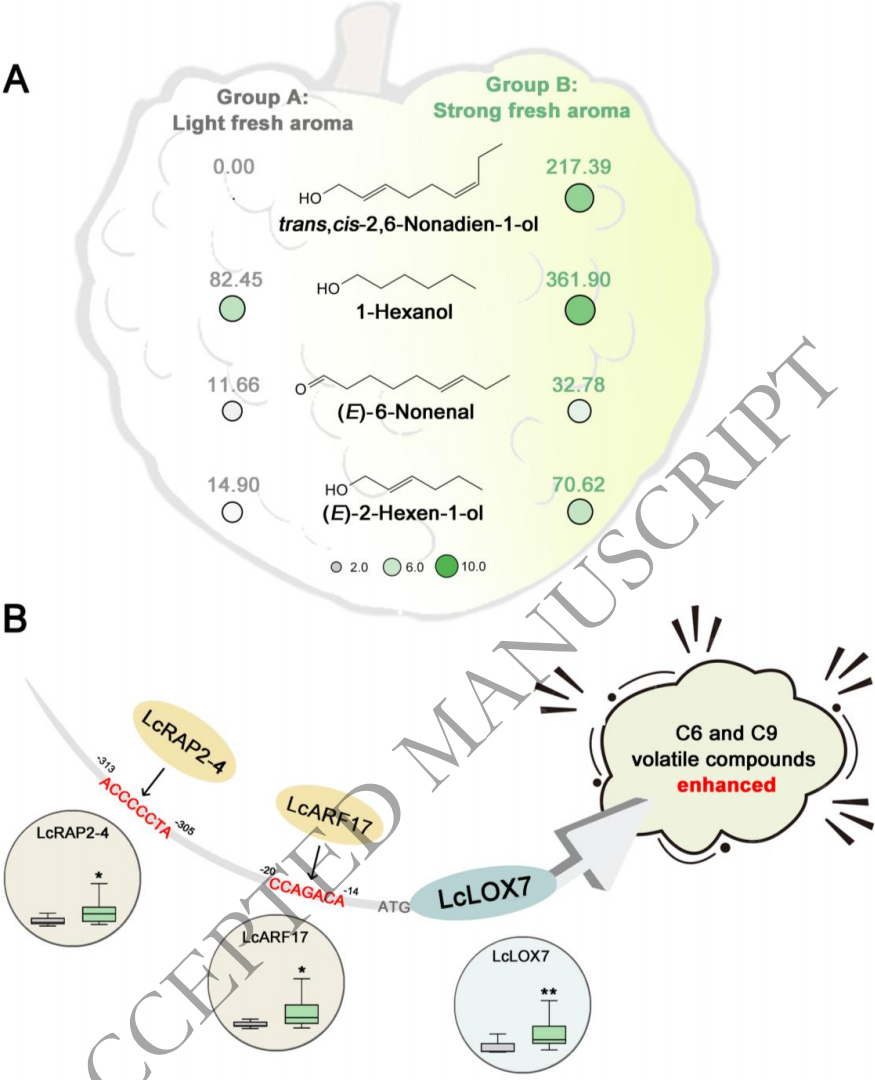
Fatty acid-derived volatile organic compounds (VOC), especially C6 and C9 aldehydes and alcohols, are vital contributors to the fresh aroma of fruits. However, the specific volatiles responsible for this freshness and their biosynthetic regulatory mechanisms remain poorly characterized in litchi (Litchi chinensis Sonn.). In this study, we systematically characterized the VOC profiles of 24 representative litchi cultivars and identified four critical compounds—trans,cis-2,6-nonadien-1-ol, 1-hexanol, (E)-6-nonenal, and (E)-2-hexen-1-ol—as primary determinants of fresh-aroma variation. Weighted gene co-expression network analysis of the transcriptomic data, corroborated by RT-qPCR, revealed a strong positive correlation between the expression of LcLOX7 and the abundance of these key fresh-aroma volatiles. Functional characterization via LcLOX7 overexpression in litchi callus and tomato fruits validated its pivotal role in enhancing the biosynthesis of fatty acid-derived VOCs, specifically C9 volatiles. Subsequent in vivo and in vitro assays confirmed the direct transcriptional activation of LcLOX7 by two transcription factors (TF), LcARF17 and LcRAP2–4. The expression patterns of these TFs correlated with the accumulation of key fresh-aroma volatiles across different litchi cultivars and paralleled LcLOX7 expression during fruit ripening. Moreover, overexpression and silencing of LcARF17 or LcRAP2–4 in litchi callus validated their regulatory function in promoting C9 volatile synthesis. Our findings collectively support a regulatory model wherein the LcARF17/LcRAP2–4–LcLOX7 module orchestrates the biosynthesis of fresh aroma in litchi fruit. Notably, this study provides the first evidence that ARF transcription factor participates in the formation of fresh fruit aroma, thereby offering novel insights for the molecular breeding of flavor quality in fruit crops.